

Zelenskyy Sacks His Most Popular Minister, Risks Turning Tide of War


In this week’s edition, you’ll read about:
Digging for Deterrence: As Risks From Russia Mount, the Baltics Build a New Defensive Line
Zelenskyy Sacks His Most Popular Minister
Bulgaria Leaves the Coalition of the Willing
Digging for Deterrence: As Risks From Russia Mount, the Baltics Build a New Defensive Line
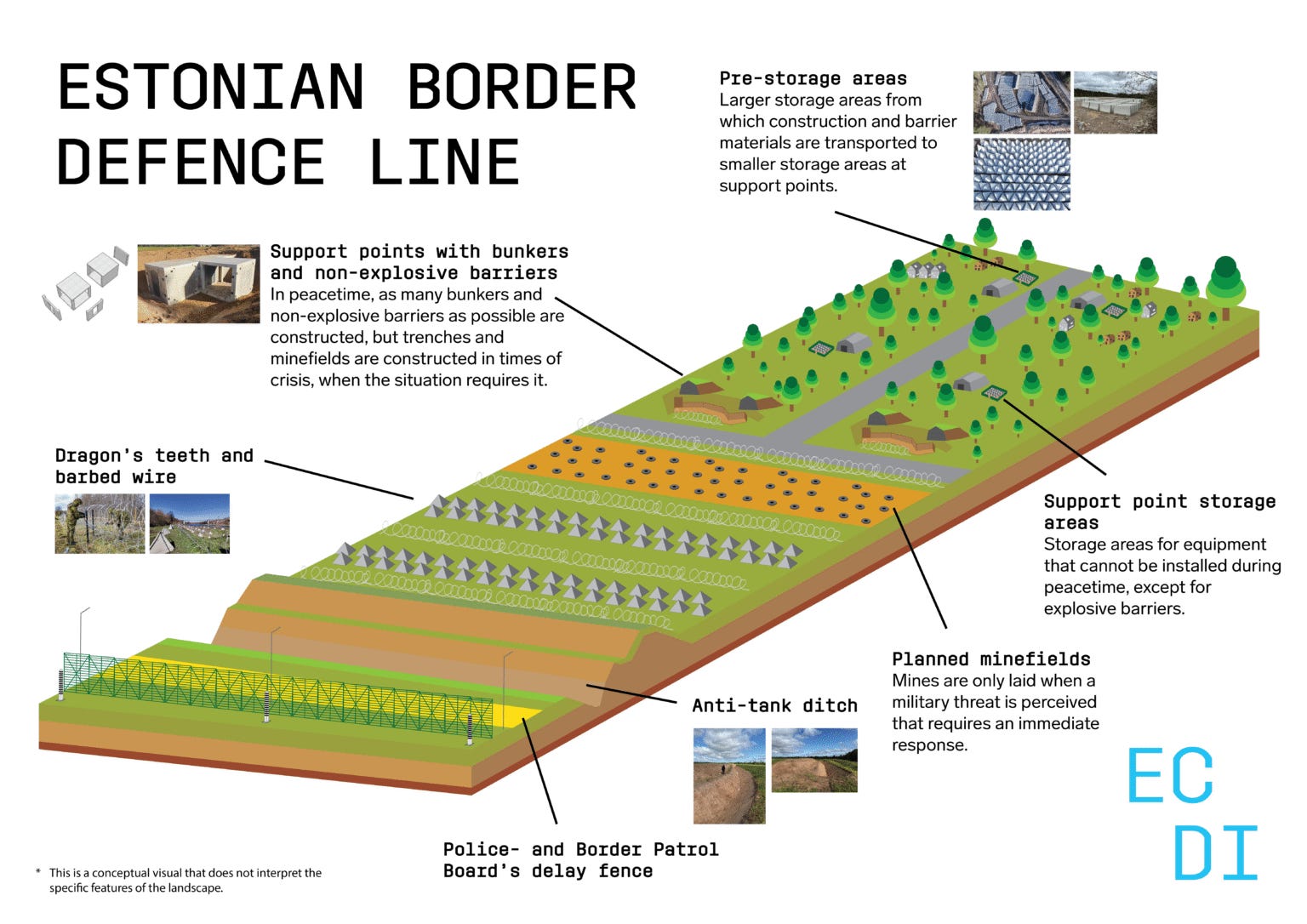
Along the Baltics’ 950-kilometre border with Russia, excavators are digging anti-tank trenches and engineers are placing concrete “dragon’s teeth.” The Baltic Defence Line, which Latvia, Lithuania and Estonia agreed upon two and a half years ago, is beginning to take shape.
The Baltic Defence Line is expected to link with Poland’s East Shield programme, a defence and deterrence project that aims to strengthen security along the country’s northern and eastern borders by 2028.
With Russia for a neigbour, the Baltic states are under mounting pressure. Just this Wednesday, Lithuania’s president Gitanas Nauseda said intelligence assessments suggest Russia is planning potential attacks on critical infrastructure in the Baltic states or Poland.
The reasoning for building the physical bareer is that the war in Ukraine has shown that taking back already-conquered territory is extremely difficult and comes at great cost in human lives, time and material resources. In addition to equipment, ammunition and manpower, physical installations are needed to defend the countries efficiently. So, just as Ukraine built its Fortress Belt to protect the Donetsk oblast, the Baltic countries are digging in to protect themselves from Russia.
The works are ramping up.
Just last week, VAS, the largest manager of the state realestate in Latvia concluded contracts for the first priority works in the construction of the Baltic Defence Line’s anti-mobility infrastructure.
According to the ministry of defence, construction will begin in the coming weeks on Latvia’s eastern border, including anti-tank ditches, the infrastructure necessary for deploying material and technical resources, and communication towers, strengthening the defence of Latvia’s border.
The Line, despite the name, is not a single continuous line of fortifications, the defence website Baltic Sentinel explains. In fact, it is not even intended to hold back an invasion by itself. The emerging system is a layered military landscape made up of anti-tank ditches, concrete “dragon’s teeth,” roadblocks, bunkers, prepared bridge demolitions, equipment depots, natural barriers, mines in wartime and firing positions from which defenders could attack a force delayed by the obstacles.
The purpose of the line is to make an attacker slow down, bunch together, reveal engineering vehicles and accept battle on terrain chosen by the defender. While the mine-laying will have to wait until wartime, which hopefully never comes, there is still a lot of work to cover.
Estonia is the fastest of the three Baltic countries to have started work, and has already cut deep scars through farmland near the Russian border in the southeastern region of Setomaa.
Over a two-month push this spring and summer, crews excavated roughly 10 kilometres of anti-tank ditches in the southeast. Threading between them are rows of 1.5-tonne concrete dragon’s teeth, lashed together with cable, wire and chains so they cannot simply be shoved aside.
Estonia aims to have around 40 kilometres of ditches in the ground in the southeast by the end of 2027.
The line will also include some 600 bunkers, which will be able to survive a direct hit from a 152 mm artillery shell; once finished and blended into the fields, they are meant to look like ordinary country cellars.
The whole system shall be largely complete by 2028.
Lithuania is preparing fortified positions and anti-tank ditches across a defensive zone extending as much as 50 kilometres into the country, and as of August 2025 its defence ministry declared that counter-mobility measures had reached “initial capability.” Although the date of completion of the full, multi-leyered defence line remains unclear.
Lithuania has also imposed restrictions on forest cutting in strategically sensitive areas, preserving terrain that could obstruct movement or conceal defensive positions.
Wetlands are also being treated as defensive infrastructure. The Lithuanian government has even decided to restore some of the drained ones, particularly along the border with Belarus.
Latvia’s segment is now moving from concept to earthworks along its 450-kilometre eastern frontier, though a recent State Audit Office report cautioned that the project needs clearer leadership and tighter interagency discipline to hit its 2028–2029 targets.
Latvia’s government doesn’t share how many kilometres of obstacles it ultimately intends to construct, but the shape of the effort is clear. The first priority-works contracts cover 27 kilometres of anti-tank ditches, nine material and equipment storage areas, and two communication towers. Alongside the ditches come dragon’s teeth, Czech hedgehogs, concrete blocks and other obstacles.
The first phase should finish by spring 2027, and major work is slated for 2028–2029, with refinements continuing as far out as 2034.
The Baltics are racing toward completion of major works by the end of the decade.
Zelenskyy Sacks His Most Popular Minister
The Ukrainian army conducted some of the most remarkable operations we’ve seen over the past week: the first unmanned amphibious landing in history; the capture of a position with an assault combining ground drones and FPVs; and the unveiling of a render of the first Ukrainian rocket, which could counter ballistic missiles.
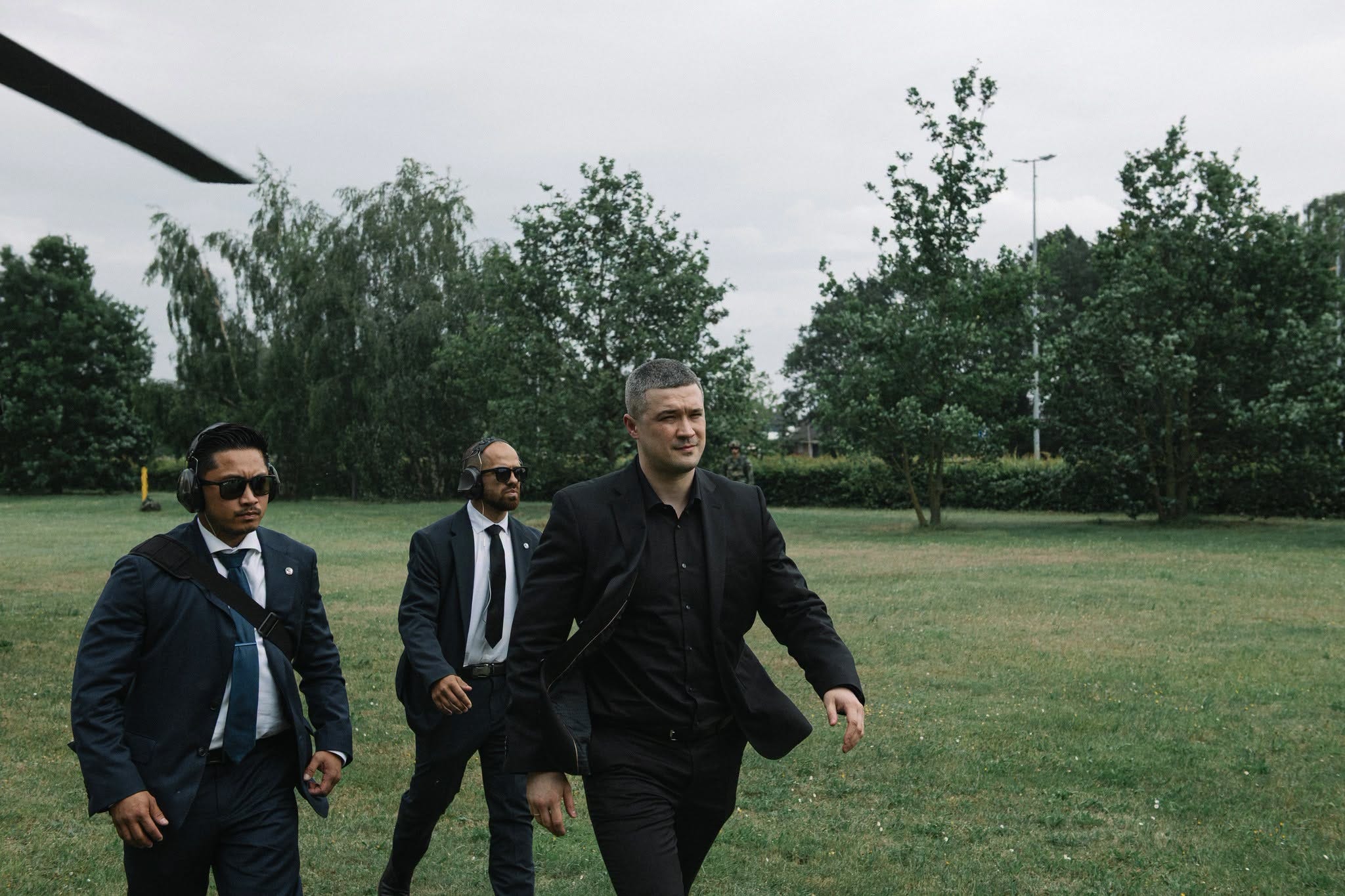
But all of that has been overshadowed by a huge political crisis, as Ukrainian president Volodymyr Zelenskyy removed defence minister Mychajlo Fedorov after just six months in the job.
Fedorov built support among soldiers and Western partners by importing Silicon Valley methods into the defence ministry: audits, open tenders, mandatory polygraphs for officials, and data over hierarchy. Moving 155mm shell procurement to open tender saved 16 per cent immediately.
He also negotiated with Elon Musk for him to strip Russian forces of Starlink access.
In fact, the successes on the battlefield that we have seen over the past months can be largely attributed to Fedorov’s reforms.
Thanks to them, he also became possibly the most popular minister in the government.
Despite all of this, when push came to shove in a dispute between him and commander-in-chief Olexandr Syrskyj, Zelenskyy chose to keep the latter.
And he is risking turning the tide of war back to Russia.
At a press conference on Thursday, Fedorov confirmed the feud with Syrskyj had ended his tenure. He credited Syrskyj with “saving Ukraine” in 2022, but said the war had since changed and his own initiatives were being blocked. “Instead of working out how to defeat Russia asymmetrically, which is the main task of the head of the army, he found a way to divide the country,” Fedorov said.
To put it simply: Fedorov has been behind the biggest digitalisation push of state operations in modern Ukrainian history, and has managed to bring that energy to the army in order to outsmart the Russians, since Ukraine cannot outnumber them. Syrskyj represents the old guard, with a more Soviet approach to warfare that may be obsolete in the current moment.
Many see Zelenskyy’s act as that of a president threatened by a subordinate’s popularity. The Financial Times, calling Fedorov the most successful defence minister of the full-scale war, noted that in Zelenskyy’s circle “loyalty and discretion are often more valuable than effectiveness.”
Hundreds protested in Kyiv and in cities including Ľviv, Odesa and Vinnycia. Zelenskyy conceded the failure was partly his own: “The problem is not only on their side — it is also on mine.” He added that he had heard the protesters, and might reconsider.
Bulgaria Leaves the Coalition of the Willing
.jpg)
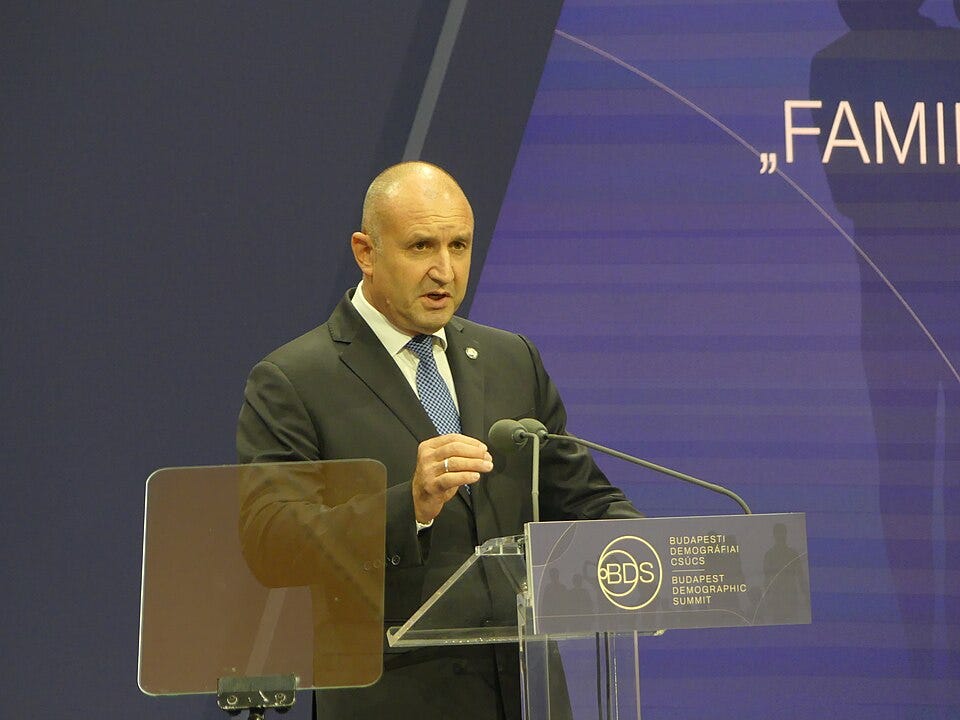
Bulgaria’s new prime minister Rumen Radev is taking his country out of the Coalition of the Willing meeting due to the group’s financial and military support for Ukraine.
Radev, a longtime critic of military aid to Kyiv, said his country does not provide defence assistance to Ukraine because such support only “prolongs the conflict,” and urged a diplomatic solution instead, Kyiv Independent reports.
The announcement underscores Sofia’s foreign policy pivot after Radev, a Russian-friendly ex-president, won the parliamentary elections in April.
Sidenotes
Over the international waters of the Baltic Sea, approximately 30 km from Ustka, Polish fighter jets intercepted a Russian Il-20 reconnaissance aircraft on Tuesday, said minister of national defence Władysław Kosiniak-Kamysz. (rp.pl)
The Bulgarian government has approved the modernisation of two strategic air bases through the Nato Security Investment Programme. The works aim to strengthen military infrastructure on Nato’s eastern flank. (economedia.ro)
China has detained a Czech businessman who cooperated with arms manufacturer Michal Strnad’s empire. Czech diplomats expect Beijing will want to exchange him for its own spy, whom Czech security services detained in Prague earlier this year. (Deník N)
 | A guest post by
|