

"Bring It On, We Will Shoot You," Says Estonian Expert on Possible Russian Provocations Against the Baltics


In this week’s edition, you’ll read about:
Warnings of Serious Russian Provocations Against the Baltics, Poland
Poland Signs €4.5bn Deal for Three New Submarines
Russia Blamed for Cyberattack That Halted Slovak Car Production
Warnings of Serious Russian Provocations Against the Baltics, Poland
Russia has been facing major challenges from Ukraine recently. The photograph of an oil refinery lid flying into the sky after a Ukrainian drone raid on Moscow has become a symbol of Russia’s inability to protect its own infrastructure.
Moreover, Ukraine has been disrupting Russia’s ability to supply its army at the front, striking highways and logistics routes deep inside Russian-controlled territory with drones. Lately, even Crimea, the biggest symbol of Russia’s aggression against Ukraine, has become dominated by Ukrainian drone superiority, which stems from its access to satellite communication through Starlink.
This poses a major challenge to the credibility of Vladimir Putin’s regime at home. As he searches for an easy win, Poland and the Baltic states are warning of possible escalation against them.
“Seeing what’s happening in Ukraine, and how Russia’s war isn’t going well right now, there’s an additional element of concern that Moscow could escalate further,” Colonel Paweł Szota, head of the Foreign Intelligence Agency, said in an interview with the Polish daily Rzeczpospolita.
The head of Polish intelligence confirmed that the agency is considering scenarios involving Russian provocations against the Baltic states, including actions involving so-called “little green men” — a term used to describe Russian soldiers without military insignia or other identifying features, who conducted military operations in Crimea and Donbas.
Even more speculation was stirred by an article in the British newspaper The Guardian, which cited Latvian intelligence as saying it had seen indications that Russia is preparing military provocations against the Baltic countries or Poland.
The article adds that this would not be a full-scale attack, but rather hybrid strikes involving missiles or drones.
As Estonian security expert Meelis Oidsalu tells me: “Since the war in Ukraine started, the risk of sabotage has been reported as high by Estonian intelligence as well. It’s nothing new.” But the fact that Latvian and Polish intelligence agencies have opened up about these risks is new, he adds, because they tend to be quite conservative when it comes to escalation signalling.
“So I think we should take it seriously,” says Oidsalu.
If Russia wanted to carry out a drone strike against one of the Nato nations, it would probably pick Poland. This would make it easier for Russia to deny responsibility compared to striking the Baltic states, because current drone routes do not run close to those countries. They do fly in the direction of Poland though.
A missile attack is largely out of the question as a form of hybrid attack, since it is basically impossible to deny: unlike Shahed drones, a ballistic missile very difficult to reroute with electronic warfare.
But drone incursions would really bring nothing new to the table. A number of Russian drones have already ended up in Poland in the past, and nothing significant happened as a result.
It would take repeated attacks by swarms of drones to inflict real damage, but doing so would strip Russia of deniability and could push Nato toward a more serious response. Russia needs to keep its attacks in the grey zone.
“Even if there were some drone attacks, or limited sabotage events, I don’t think it would change much on a large scale,” says Oidsalu. “The only serious escalation would be seizing some territory for a period of time,” he adds.
A land attack like this would not be an easy win for Putin, though, and would be manageable for the Baltics and Poland, since they currently have the military power to deny Russia its goals.
“Personally, I don’t feel threatened. Even if some green men show up somewhere — bring it on. We have the firepower. We will shoot you,” says Oidsalu.
The truth is that for Russia, it is more convenient to remain constantly on the verge of escalation against the Baltics than to actually follow through.
As Lithuanian armed forces chief of staff Raimundas Vaikšnoras said recently, Russia’s increasingly aggressive rhetoric and frequent provocations are aimed at undermining the population’s trust in the state and its institutions.
In that sense, it is perhaps more of an information campaign than a real military threat.
What to take away from this: reports in the Western media about possible Russian escalation against the Baltics and Poland seem to come and go every couple of months. They often bring various scenarios of possible Russian victory and Nato’s capitulation or dissolution.
Officials from the Baltic states then often try to calm the media panic, and in doing so often understate threats that are true and real.
It is true that Russia is looking for ways to escalate its conflict with Nato — it has been doing so for more than four years — and its acts of sabotage in CEE are on the rise and becoming ever more aggressive.
But it is also true that Poland, the Baltics and the Nordic members of Nato are perhaps the best prepared to face these threats, even if significant gaps remain in their defence — especially against drones.
There is pretty much no way Russia could launch a major military attack against any Nato country while its army is stretched thin in Ukraine. Once the fighting there finally stops, Nato’s eastern flank will have about six months to trace the paths of Russian logistics and figure out the vectors of its next move.
In the meantime, perhaps the biggest challenge is navigating an information space full of heightened emotions, misinformation, and genuine but poorly handled communication, in order to see the real picture of the security threats facing our region.
Poland Signs €4.5bn Deal for Three New Submarines
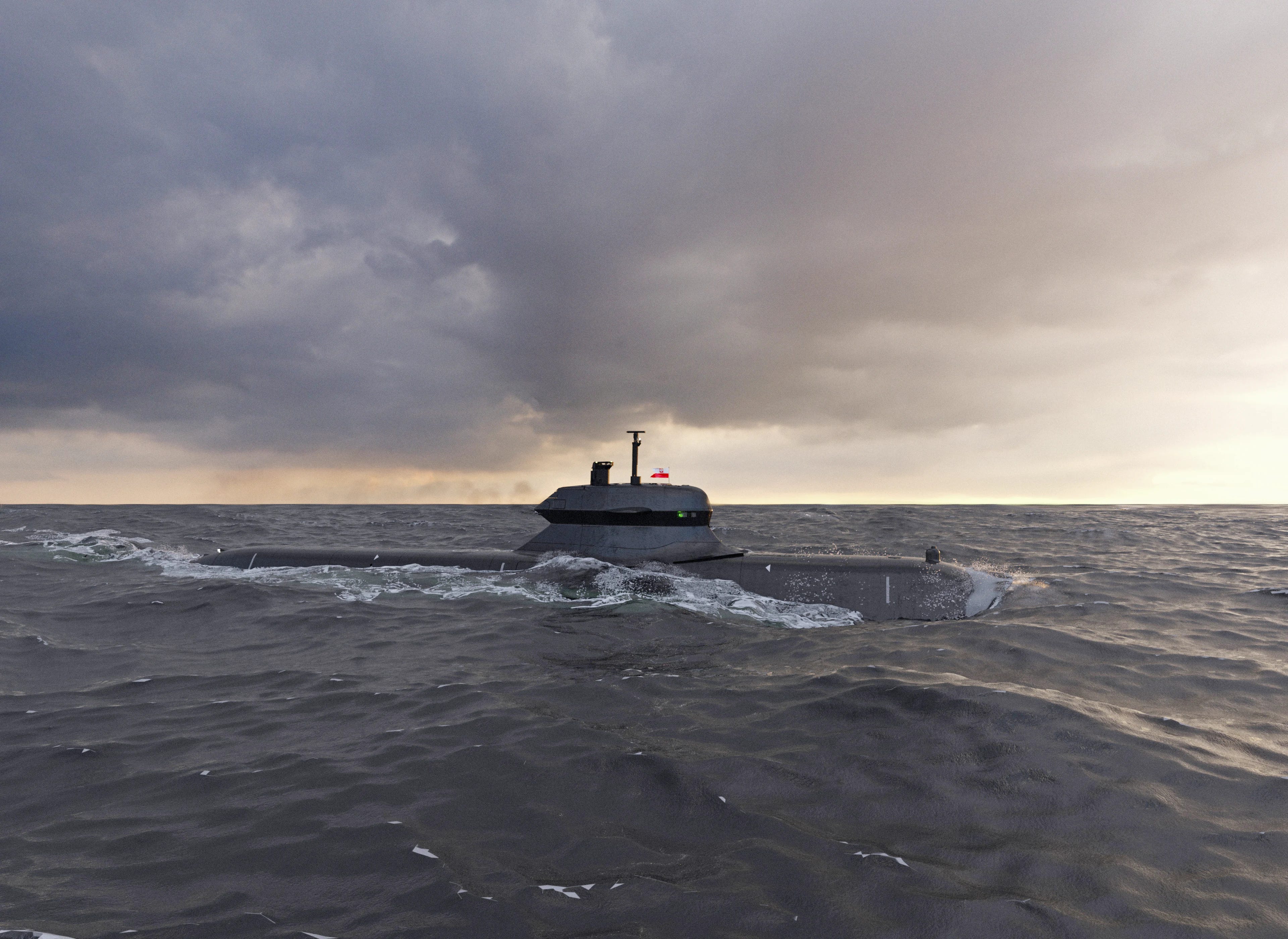
After much back-and-forth in the process, Poland has finally signed a contract for the Swedish submarines. According to Polish officials, they are like underwater F-35s — the high-end fighter jets Poland added to its air force in June.
A contract for the purchase of three A26 submarines for the Polish Navy was signed in Gdynia with the Saab Kockums shipyard in Karlskrona on Monday. The purchase will amount to about €4.5bn.
Polish prime minister Donald Tusk noted that, in Gdynia, the agreements signed went beyond the submarine contract for the Polish Navy, also including the acquisition of the “Ratownik” rescue vessel by Sweden and further investments by Saab in Poland.
According to the Swedish prime minister, Polish-Swedish relations are currently the best and deepest they have ever been.
The submarines have operational capabilities tailored to both the navy and special forces. They can operate drone swarms and manage the entire security architecture in the region. They also remain completely invisible to the adversary, according to Poland’s minister of defence Władysław Kosiniak-Kamysz.
The new submarines will replace the ageing ORP Orzeł, which has been in service since the 1980s and is long overdue for retirement. Deliveries are scheduled for 2031-2038.
In the meantime, a used A17 vessel, which will provide so-called bridging capabilities, is scheduled to be delivered to Poland next year.
Russians Behind Cyberattack That Halted Slovak Car Production

A cyberattack on one of the largest carmakers in Slovakia, Jaguar Land Rover, forced the Indian-owned British automaker to halt production at five of its plants last autumn.
The production halt lasted over a month and caused more than €2bn in damage to the British economy.
Most of the five thousand workers at the Slovak plant had to stay home as a result, on reduced pay.
A new investigation by The New York Times found that Russian hackers were behind the attack, and that they had not demanded a ransom from the company. The methodology also bore the hallmarks of a state-organised operation rather than a private group looking for a quick payday.
Given that Russia is currently the biggest cybersecurity threat in the world, according to experts, this comes as little surprise.
Sidenotes
Czechia has tested GOVSATCOM, a European satellite network being gradually rolled out, for secure and modern communication for European governments, organisations and other bodies. It serves as a precursor to the IRIS2 satellite system, which may eventually create a European alternative to Starlink. (Lupa.cz)
Polish Defence Institute experts, along with other specialists, suggest that Poland should propose the creation of a Nato Artificial Intelligence Centre of Excellence at the Nato summit in Ankara. (Cyberdefence24)
The first disbursement of €956m under the European Security Action Facility programme has reached Lithuania. (LRT)