

Why the Polish–Ukrainian Relations Reached Their Worst Point in Decades


In this week’s edition, you’ll read about:
How History Brought Polish–Ukrainian Relations to Their Worst Point in Decades
A Czech Nuclear Protection Lab Repeatedly Let Chinese Military Experts Into Its Labs
Belarus’ Exiled Opposition Warns Zelenskyy That Minsk May Soon Join Russia’s War
Why the Polish–Ukrainian Relations Reached the Worst Point in Decades
As the high-level conference on Ukraine’s postwar recovery opens today in the Polish coastal city of Gdańsk, the leader of the country it is meant to help will not be there. Volodymyr Zelenskyy had been expected to co-host the Ukraine Recovery Conference, but the Ukrainian delegation will instead be led by prime minister Yulia Svyrydenko. His absence is a measure of how far relations have deteriorated with the conference’s host, Poland.
The rift traces back to Zelenskyy’s decision last month to name an elite military unit, the Sever Special Operations Centre, after “the heroes of the Ukrainian Insurgent Army,” the UPA. In Ukraine, the UPA is seen as a symbol of heroic resistance against Soviet forces in the fight for independence; in Poland, it is notorious for killing up to 100,000 Poles in the Volhynia region between 1943 and 1945, in an effort to ensure the territory did not become part of postwar Poland. The Polish parliament has unanimously declared the killings a “genocide committed by Ukrainian nationalists” in 2016.
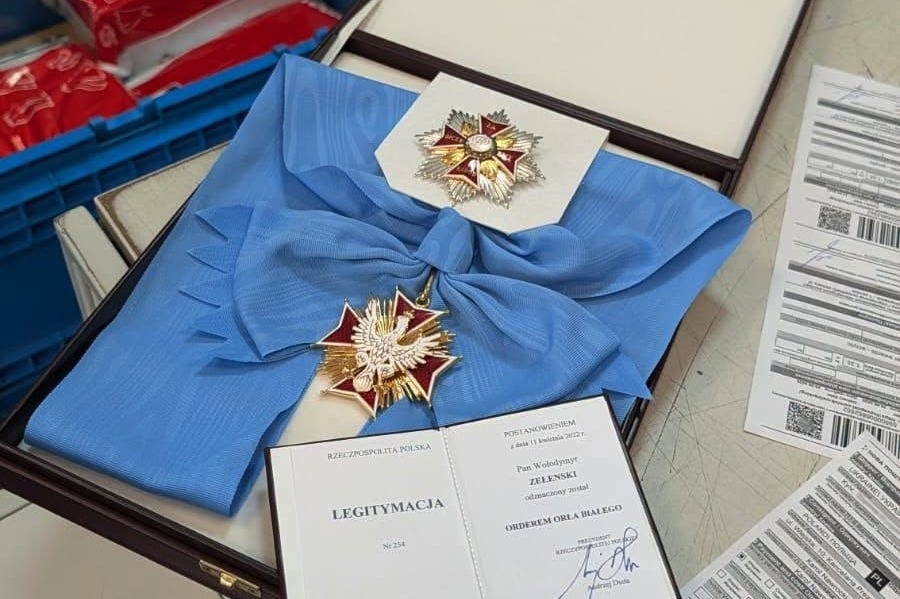
Polish politicians reacted with anger and accusations of historical insensitivity to Zelenskyy’s move. The conservative president Karol Nawrocki said he was outraged, and on Friday confirmed he would strip Zelenskyy of Poland’s highest civilian honour, the Order of the White Eagle, conferred on him in 2023.
Zelenskyy answered in kind. Over the weekend, he posted a photograph of the medal packed up and sent back to Warsaw by Nova Post, a private Ukrainian courier firm — a deliberate piece of trolling that treated Poland’s top decoration as an ordinary parcel. He accused Nawrocki of exploiting rising anti-Ukrainian sentiment ahead of next year’s parliamentary election, drawing a parallel with Hungary’s Viktor Orbán. Other Ukrainian figures followed his lead, returning their own Polish honours: former presidents Leonid Kuchma, Viktor Yushchenko, and Petro Poroshenko, along with military intelligence chief Kyrylo Budanov and foreign minister Andrii Sybiha.
The episode has also reopened a debate about the order itself, which over the centuries has gone to deeply contentious figures — Russian imperial names such as Catherine II, Grigory Potemkin and Alexander Suvorov; the leaders of the Targowica Confederation, remembered in Poland as national traitors; and, in the twentieth century, Benito Mussolini and Philippe Pétain. For many, that history reframed the decision to revoke Zelenskyy’s award not as a defence of the honour’s prestige but as a political gesture aimed at Ukraine. An unexpected side effect, critics note, is that Poles themselves have now lost respect for the decoration.
For all the heat, neither side disputes the basic framework of the relationship: Poland remains one of Ukraine’s most important backers, and Kyiv knows how much it depends on Polish military, logistical, and diplomatic support. That is precisely why the damage matters. Prime minister Donald Tusk warned that the quarrel “delights Putin and shocks our allies,” and Zelenskyy himself cautioned that the dispute would weaken Polish–Ukrainian ties at a moment of war with Russia.
While Polish–Ukrainian relations have been complicated for decades, they appeared to transform into a tight partnership after the start of Russia’s full-scale invasion of Ukraine in 2022.
By 2023, however, they had already begun to deteriorate during the farmers' protests, when activists of the Polish far right blocked the Polish-Ukrainian border, seriously damaging the Ukrainian economy. Since 2024, the topic of Volhynia and other historical conflicts has resurfaced. In 2025, negative sentiment among Poles toward immigrants from Ukraine intensified, which contributed significantly to the victory of Karol Nawrocki.
Czech Nuclear Protection Lab Let Chinese Military Experts Tour Its Facilities
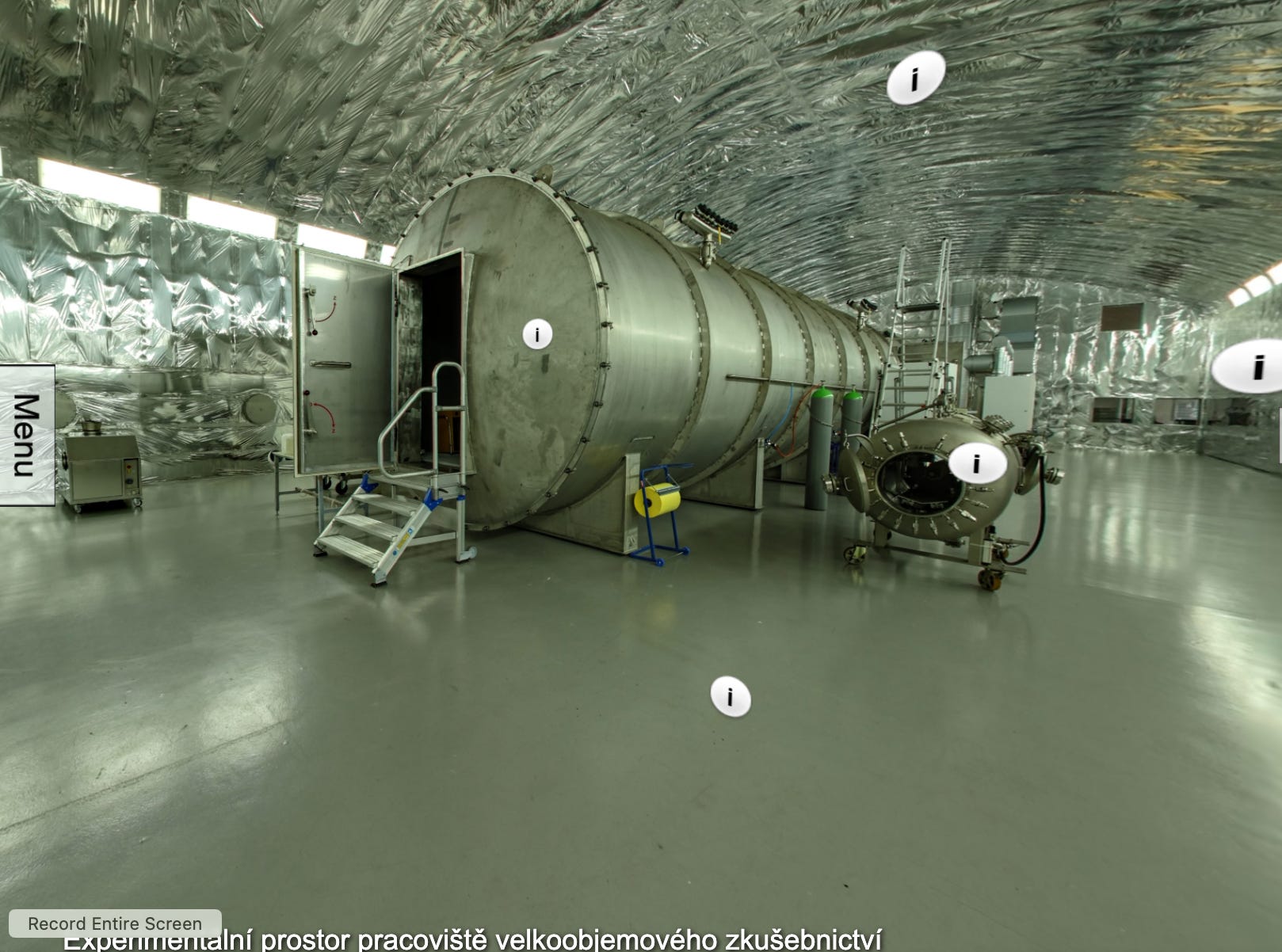
The Czech State Institute for Nuclear, Chemical and Biological Protection — which trains members of the Security Information Service (BIS) and cooperates with Nato — repeatedly admitted military experts from Beijing into its laboratories, according to an investigation by Deník N.
The institute plays a key role in protecting the population against lethal agents, for example, in the event of a chemical weapons attack.
The Czech researchers taught the Chinese, who paid about €33,000 for it, how the country handles radioactive and toxic materials. They did so despite the fact that in 2021, the United States placed Beijing’s Academy of Military Medical Sciences on a special list of organisations with which Americans are barred from doing business.
According to Washington, the institution is involved in developing biotechnologies for the Chinese military, including so-called brain-control weapons. The military academy became part of a sanctions package that responded to the Chinese government’s repression of the Uyghurs.
The Czech institute cooperated with Beijing’s Academy of Military Medical Sciences for three years.
“Everyone, and especially research or strategic organisations, should be aware of how serious the risks of such cooperation can be. Scientific and industrial espionage is among the main activities of the Chinese intelligence services,” the spokesperson of BIS told Deník N.
Shortly after the article on the institute’s activities was published, the contract with the Chinese military university was terminated, and the head of the institute, Tomáš Dropa, was removed from his post.
Belarus’ Exiled Opposition Warns Minsk May Soon Join Russia’s War
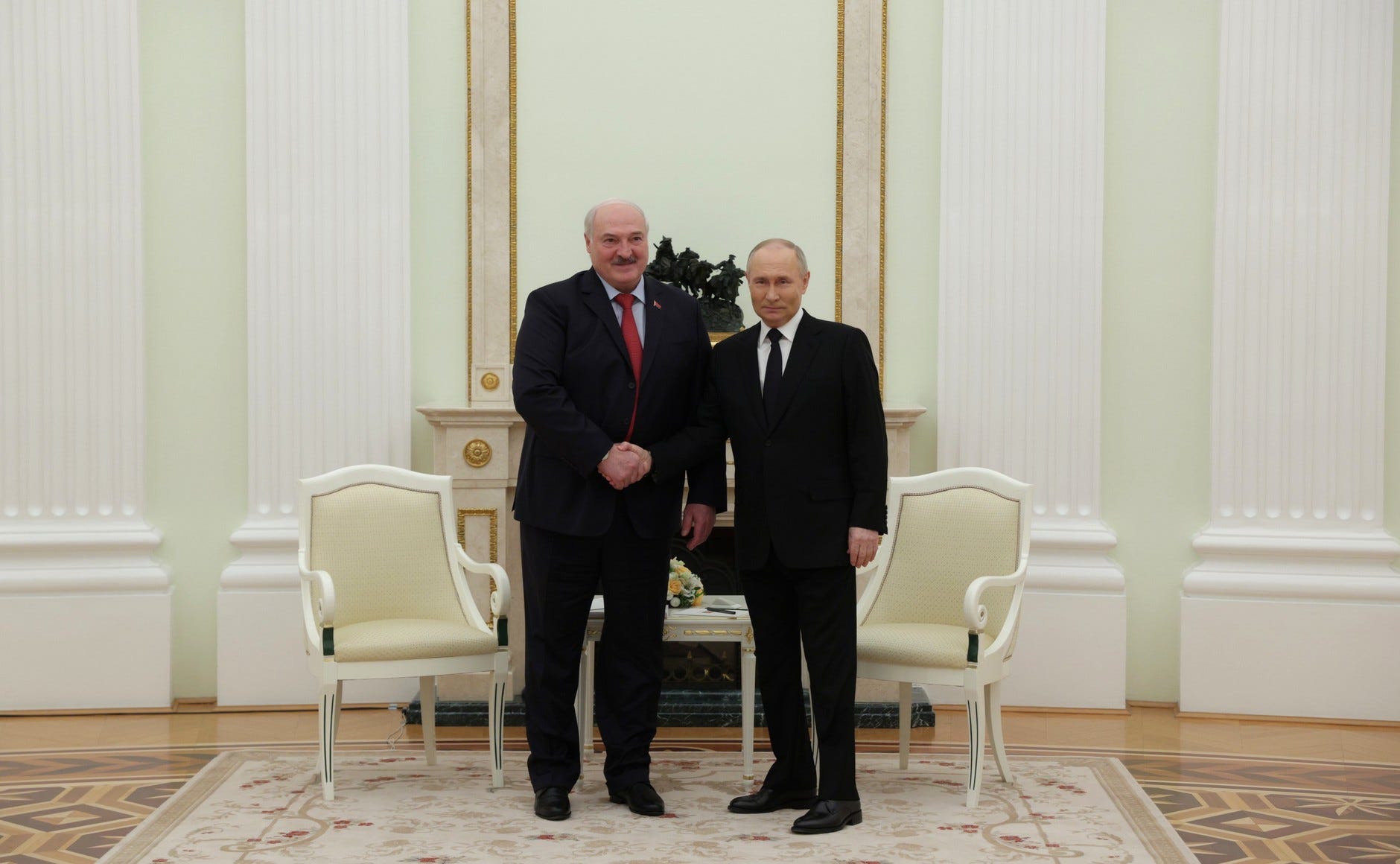
Belarus’ exiled opposition has handed President Volodymyr Zelenskyy a list of warning signs that Minsk soon plans to enter Russia’s war against Ukraine.
The document outlines clear policy areas pointing to Belarusian President Alexander Lukashenko’s domestic shift towards a wartime posture.
The signs the exiled cabinet drew attention to included constitutional changes cancelling Belarus’ status as a neutral, non-nuclear state, a two-fold increase in the recruiting of new contract soldiers, a five-fold increase in military spending in the state budget, and the militarisation of society, including children.
The report notes that Belarus adopted a new military doctrine in 2024 that officially allows pre-emptive strikes in response to an “imminent threat.”
The warning comes at an interesting time, as the self-proclaimed Belarusian president seems to have accommodated the Ukrainian president on the matters of equipment on Belarusian territory that was mounted on communications towers and was being used to support Russian drone attacks against Ukraine.
Zelenskyy had warned Minsk that Belarus had one week to remove the equipment or face unspecified action from Ukraine. Following that, the equipment stopped operating on Belarusian territory as of June 22.
Sidenotes:
Czechoslovak Group (CSG), the arms and engineering holding owned by Michal Strnad, is deepening its business in Ukraine. A deal sealed on Monday at a defence trade fair in Paris will see CSG’s AviaNera Technologies subsidiary license the Ukrainian manufacturer Ukrajinska Bronetechnika to produce drone propulsion units on Ukrainian soil. (e15)
Contracts for the purchase of three A26-class submarines and the lease of one used A17-class submarine are to be signed in Gdynia on Monday, June 29, 2026. This will be one of the most expensive Polish individual armament programs in recent years. (Defence24)
After a political conflict spanning weeks between Czech president Petr Pavel and the government of Andrej Babiš about whether the president will be allowed to join the state delegation to the nearing Nato summit in Ankara, Turkey, the Constitutional Court had to step in to resolve the squabble. In a resolution on Wednesday, the court ruled that the government must include the president in its delegation in accordance with the competencies of the president, which are rooted in the Czech constitution. (Ústavní soud)