

Russia’s Expanding GPS Attacks Are Blinding Europe’s Pilots


In this week’s edition, you’ll read about:
Russia’s Expanding GPS Jamming and Spoofing Are Blinding Europe’s Pilots
US Policymakers Made Poland a Priority, Even as Troop Deployment Confusion Lingers
Why Czechia Wants to Sell a Strategic Defence Company at the Worst Possible Time
Russia’s Expanding GPS Attacks Are Blinding Europe’s Pilots
GPS signals in the CEE are increasingly under Russian attack, forcing the aviation and defence sectors to prepare for unreliable satellite navigation.
According to Reuters, Russia can now falsify GPS signals deep into Europe, at a radius of up to 450km from its Kaliningrad exclave, thanks to hugely expanded capacity. The information comes from Lithuanian officials, namely the national communications regulator.
Russia has increased its number of GPS “spoofing” antennae, which broadcast false signals to confuse other location systems, from three in early 2025 to 36 now. The antennae are based in the heavily militarised territory of Kaliningrad, sandwiched between Nato members Lithuania and Poland on the Baltic coast.
Occasional interference, which began during the 2023 Nato summit in Vilnius, has grown into a systemic, permanent, and unending Russian provocation against European security.

A map of GPS interference above shows that Russia’s GPS falsification could reach across Estonia, Latvia, and Lithuania, most of Poland, and parts of Finland, Sweden, and Belarus, as well as the Baltic Sea.
Data collected from aircraft on GPS disruptions shows a clear pattern, the Estonian wire ERR reports. While most of Western Europe and North America appear almost problem-free on disruption maps, extensive yellow and red areas surround Russia’s border regions. Red marks areas where more than 10 percent of aircraft passing through within the past 24 hours have detected GPS interference. The areas around Estonia and Finland, as well as the Kaliningrad region, fall into this category.
The main purpose of the spoofing and jamming systems is likely to protect strategic sites in Russia from drone attacks. As Ukraine has targeted facilities deeper within Russian territory during the war, disrupting navigation has become a key defensive measure.
The claims are supported by recent events. A British Royal Air Force jet carrying the UK defence secretary had its signal jammed when it flew near the Russian border last week. John Healey was travelling back to the UK on Thursday after visiting British soldiers in Estonia when the incident happened, the Times first reported. Russia is believed to be behind the attack, which meant pilots had to use a different navigation system as the plane’s GPS was disabled during the three-hour flight.
Smartphones and laptops were unable to connect to the internet. It is unclear if Healey was deliberately targeted, but the flight path was visible on aircraft tracking websites.
Last year, a Spanish military jet carrying defence minister Margarita Robles experienced a GPS disturbance near Kaliningrad, while a plane carrying European Commission President Ursula von der Leyen was jammed en route to Bulgaria.
US Policymakers Make Poland a Priority, but Confusion Around Troop Deployment Remains
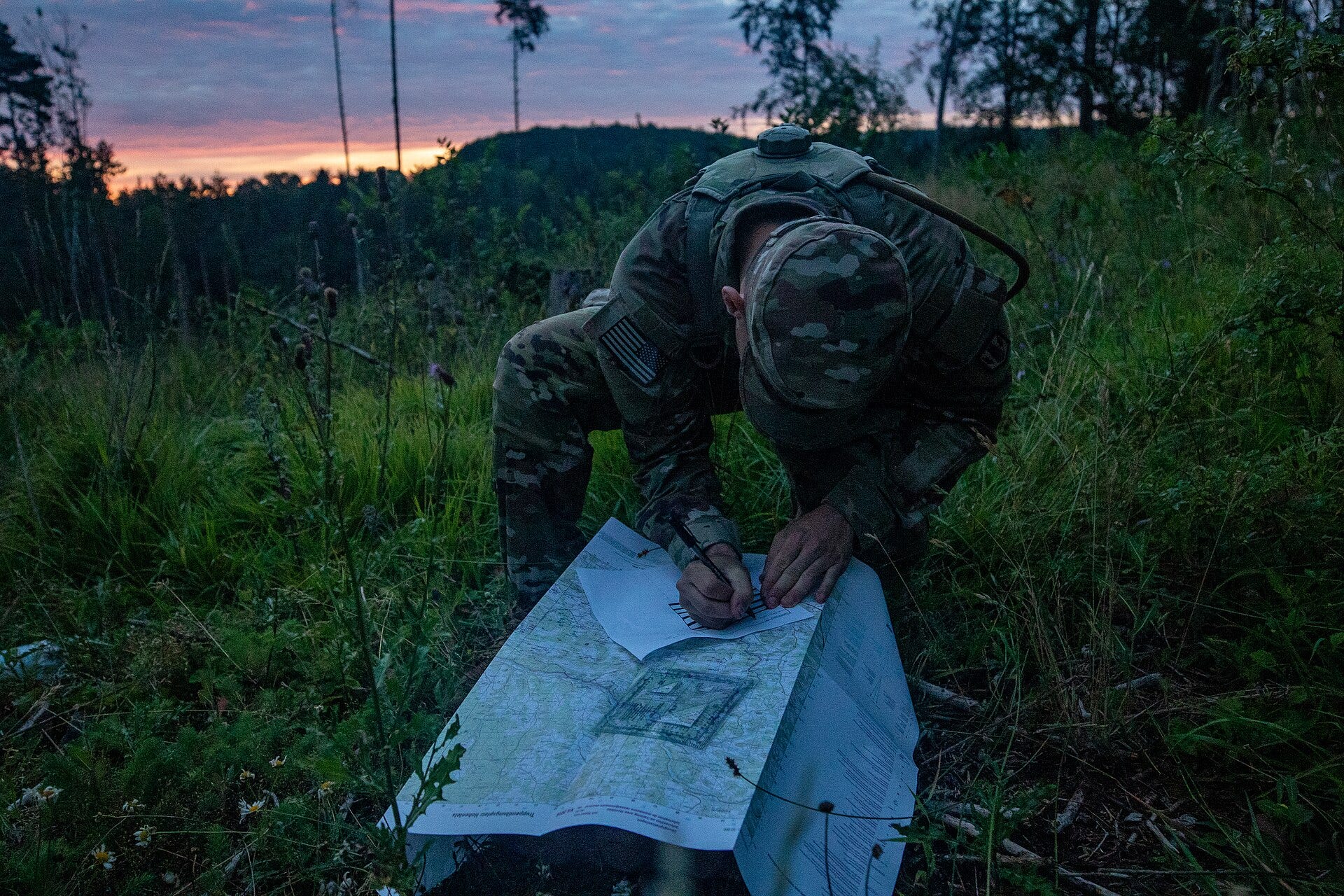
Last week, we wrote that Donald Trump was punishing one of America’s most loyal allies, Poland, by cancelling the rotation of 4,000 American troops to the CEE country. However, as so often happens with the American president, the situation has since pretty much reversed, with talk of Poland receiving even more US soldiers than before.
Here is what happened.
As the US began taking revenge on Europe for not taking part in the American special military operation in the Strait of Hormuz, it started pulling its troops out of the old continent, announcing the withdrawal of thousands of soldiers from Germany. Additionally, the Pentagon said it was halting the deployment of 4,000 troops to Poland.
However, last Thursday, Trump announced in an about-face that the United States would send an additional 5,000 troops to Poland. He said the decision was based on the successful election of the now-president of Poland, Karol Nawrocki, and the relationship between the two politicians.
The announcement was made a few hours after talks with the Polish side at the Pentagon, during which the American side assured that, despite the ongoing reduction of US forces in Europe, the level of military presence in Poland would not ultimately be reduced.
Trump’s declaration, however, raised questions about its true scope. It remains unclear whether the announced 5,000 troops constitute a new contingent or a reinstatement of a suspended deployment. If the decision included both a resumption of the rotation and a real reinforcement, the total number of US troops in Poland could reach approximately 15,000. It is also unclear whether the new forces in Poland would include those the US is withdrawing from Germany.
As Gazeta Wyborcza US correspondent Maciej Czarnecki writes, there is a duality in the nature of Donald Trump’s policy towards Europe and Poland. On one hand, the new defence spending bill includes a provision seeking a permanent US Army presence in Poland. On the other hand, the Americans want to provide Nato with increasingly fewer weapons.
America intends to reduce its involvement in Nato. At the same time, despite the confusion surrounding the suspension of troop rotation, it promises to treat Poland exceptionally, as a model ally. On the latter, the government and Congress speak with one voice. On the former, the administration is in favour of withdrawals, while the politicians on Capitol Hill are trying to counteract it—as much as they can.
The House of Representatives Armed Services Committee, led by Republican Mike Rogers—who, according to Gazeta Wyborcza, played a key role in efforts to prevent the US from reducing its presence in Poland—has proposed a draft of the US National Defense Authorization Act for 2027, an annual law on defence spending. The document advocates for the permanent presence of American forces in our country.
Currently, the vast majority of the approximately 10,000 American troops in Poland are deployed on a rotational basis. Only about 370 are permanently stationed. Increasing this number would send a clear signal to Russia.
However, in practice, permanent US bases in Poland are still a long way off. First, there’s no clear political decision from Trump. Second, Poland lacks the infrastructure to permanently accommodate soldiers: housing for their families, barracks, hospitals. This would require significant expenditure and likely a multi-year programme.
Therefore, in the meantime, Warsaw continues to seek rotational units, the future of which remains unclear even following Trump’s announcement on Thursday.
Czechia Is Looking to Sell a Strategic Defence Company. But Why Now?

As Europe faces the biggest security and defence challenge since World War II, the Czech prime minister thinks it’s a good time to get rid of a strategic defence company.
After Friday’s visit to the state-owned firm Explosia, prime minister Andrej Babiš announced that the state is considering selling it. This is despite the fact that it is not only a profitable enterprise, but also a firm on which the defence capability of the Czech Republic would partly depend in the event of war.
Explosia manufactures explosives (duh), gunpowder and other strategic products urgently needed at a time of European rearmament. The company is 100% state-owned through the Ministry of Industry and Trade and, like other producers of militarily usable material, has seen its profits rise significantly since the start of the full-scale Russian invasion of Ukraine.
After his visit to Explosia, Babiš himself mentioned France’s alleged interest in buying the firm, which President Emmanuel Macron had reportedly hinted at to him. At the same time, it is known that the Czech Republic’s largest arms manufacturer, Michal Strnad, head of CSG, had already shown interest in Explosia earlier.
“If the state gives up the ability to control this important raw material for the defence industry, then it cannot guarantee that, in the event of some problem, we will have enough ammunition to defend ourselves or one of our allies,” says Jan Novotný, deputy editor-in-chief of the economic magazine e15 and very much a friend of how wee cee it, in an interview for Seznam Zprávy.
Sidenotes:
Poland received its first three of 32 F-35A stealth fighter jets from the US last week. (Notes From Poland)
This August, ORP Wicher, the first frigate, will be finished in Gdynia and will become the largest ship in the history of the Polish Navy. (Rp.pl)
The CSG group and the South African company Reunert are establishing a joint venture in Slovakia, Fuchs Electronics Europe. The new firm will manufacture modern electronic fuses for large-calibre ammunition at a site in Dubnica nad Váhom. (e15)